Crystal-clear water doesn’t happen by chance — it’s the result of a properly designed pool filtration system working efficiently behind the scenes. Whether you own a residential swimming pool or manage a commercial facility, choosing the best pool filtration system in Pakistan is essential for maintaining hygiene, water clarity, and long-term cost savings.
Without proper filtration, pools quickly develop cloudy water, algae growth, and bacteria buildup. In this complete guide, we’ll explain how filtration systems work, the different types available, pricing factors in Pakistan, and how to choose the right system for your needs.
How Swimming Pool Filtration Systems Work
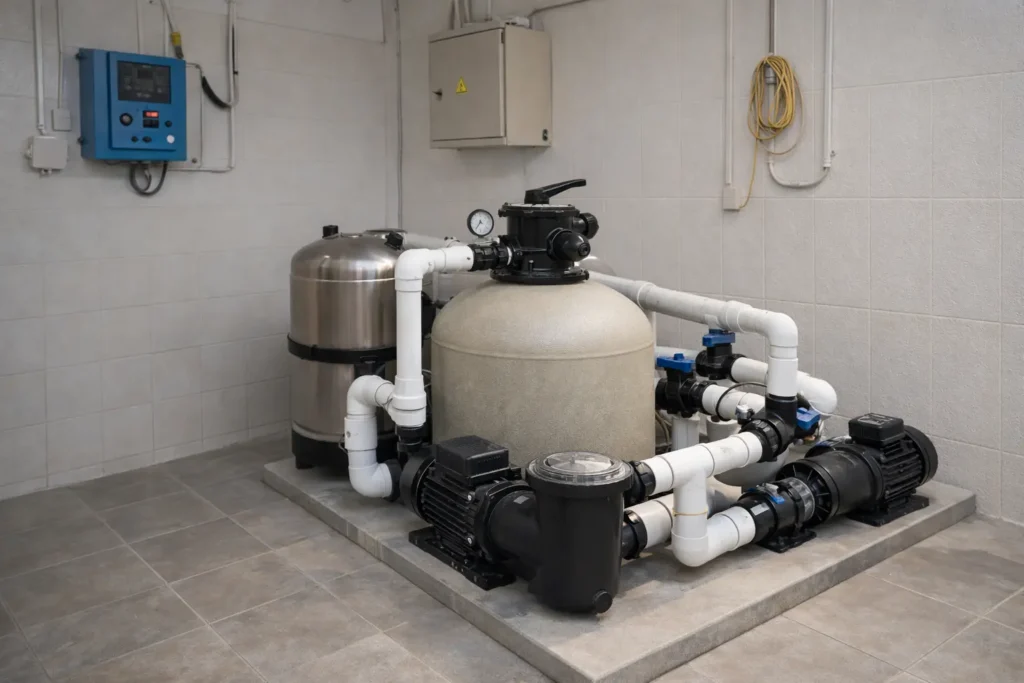
At their core, swimming pool filtration system keep water clean through a continuous circulation and cleaning cycle. Water is constantly drawn from the pool, filtered to remove dirt and microscopic impurities, and then returned back, over and over again. This ongoing process maintains clear, balanced water while preventing algae growth, bacteria buildup, and unpleasant odors.
The Basic Cleaning Cycle Explained
Every swimming pool filtration system follows three essential steps:
- Water enters through skimmers and main drains
- It passes through a filtration medium that traps debris and fine particles
- Clean water flows back into the pool
Although the process sounds simple, performance depends heavily on the quality of the pump, filter, and internal components. Proper circulation ensures that water from every corner of the pool is evenly treated and refreshed.
Why Circulation Is Just as Important as Filtering
Even the best swimming pool filtration systems cannot perform effectively without proper water movement. Good circulation prevents “dead zones” where stagnant water allows bacteria and algae to grow. When water flows evenly throughout the pool, filtration becomes more efficient and overall water clarity improves.
In short, strong circulation combined with efficient filtering is the key to maintaining a healthy, sparkling swimming pool.where impurities are trapped. The cleaned water is then pushed back into the pool, completing the cycle and maintaining consistent water clarity and hygiene.
Types of Pool Filtration Systems Available Today
Not all pool filtration systems are created equal. Choosing the right type depends on usage, size, and maintenance preferences.
Sand Filter Systems
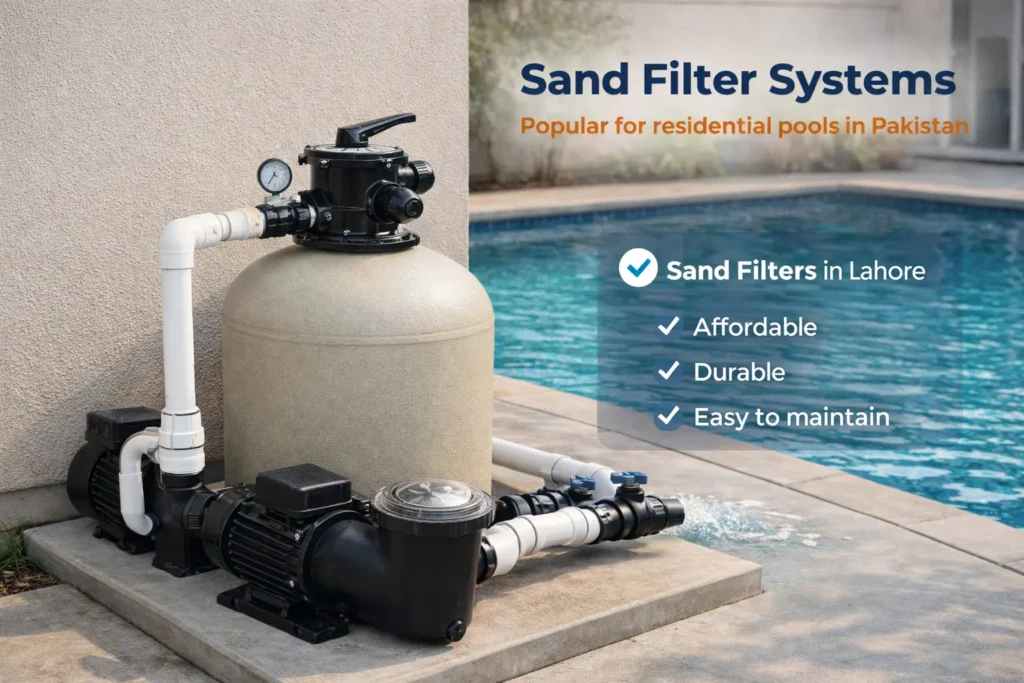
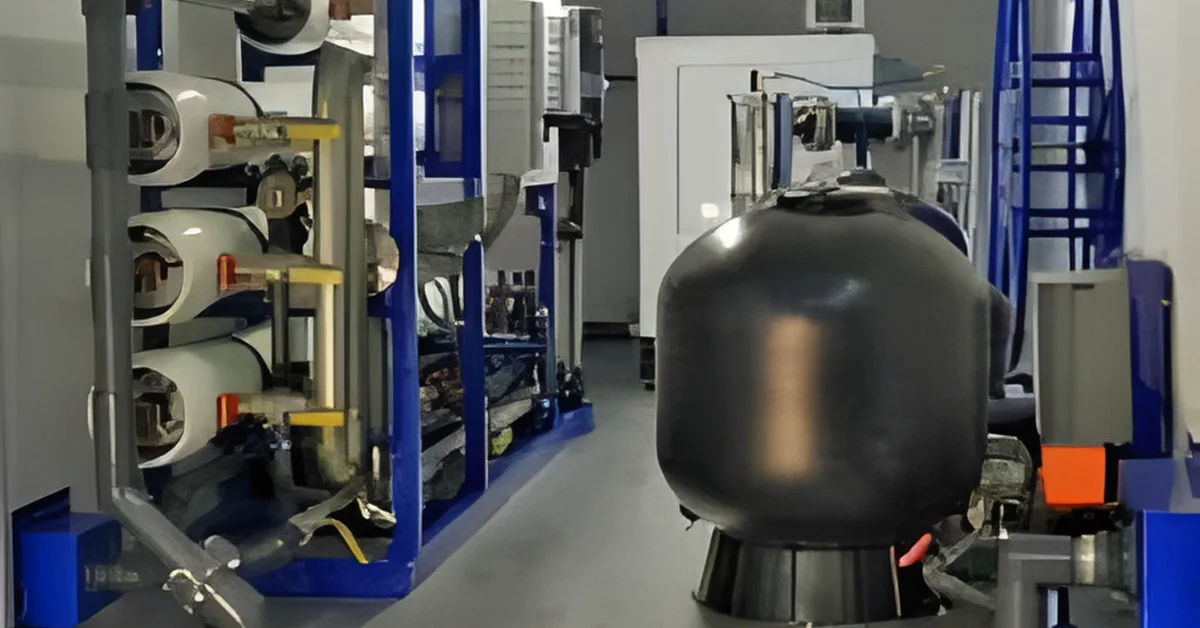
Sand filters are one of the most commonly used systems in Pakistan. These filters are best for residential pools and moderate usage. They use specially graded sand to trap dirt and debris as water passes through. Sand filter for swimming pool Pakistan searches are growing because they are:
- Affordable
- Durable
- Easy to maintain
Many homeowners in Lahore prefer sand filters due to their cost-effectiveness.
Cartridge Filter Systems
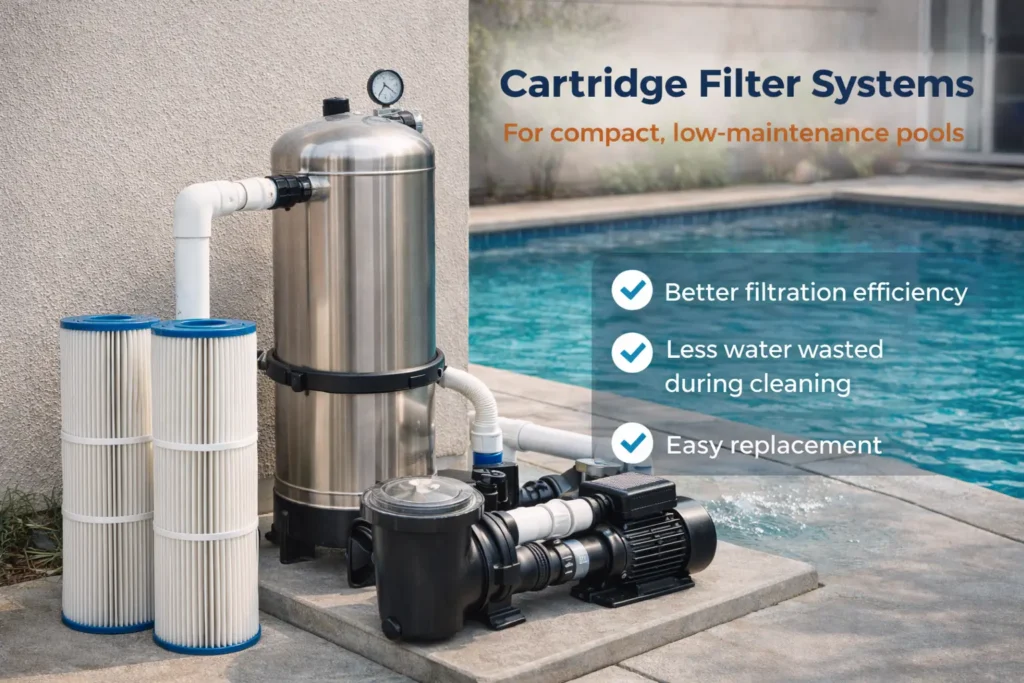
Cartridge filters use pleated filter elements to capture smaller particles. These filters are best for smaller pools and low-maintenance setups. Benefits include:
- Better filtration efficiency
- Less water wasted during cleaning
- Easy replacement
If you’re looking for a compact pool filtration system for home in Pakistan, cartridge options are worth considering.
Commercial Pool Filtration Systems
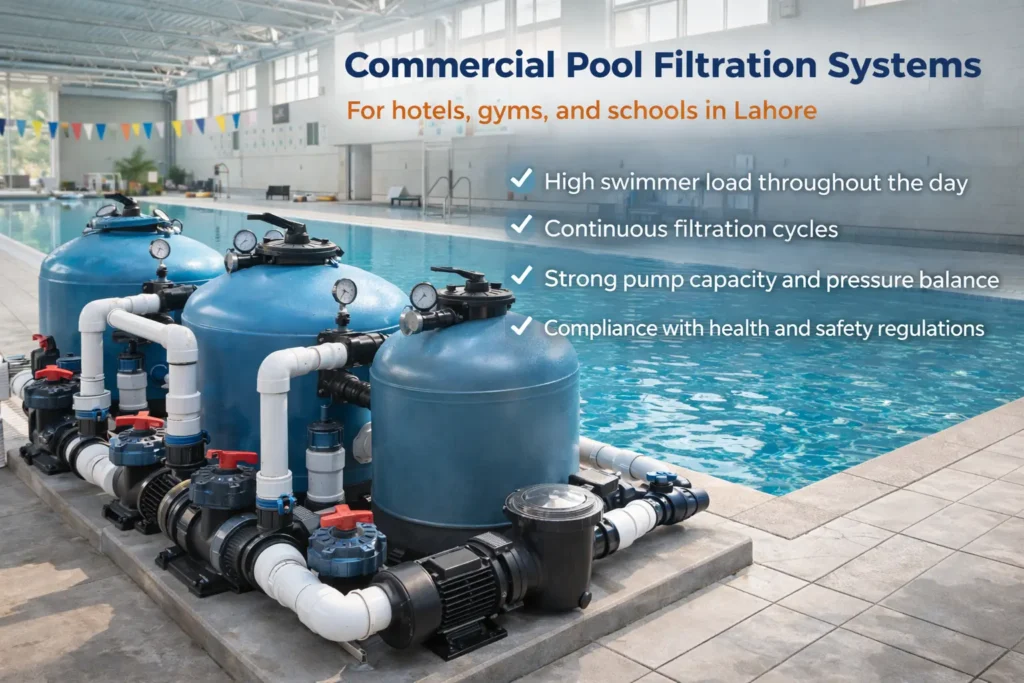
Large facilities require heavy-duty commercial pool filtration systems designed for continuous operation and high swimmer traffic. Unlike residential setups, commercial pools must maintain strict hygiene standards while handling constant water circulation. These systems are engineered for:
- High swimmer load throughout the day
- Continuous filtration cycles
- Strong pump capacity and pressure balance
- Compliance with health and safety regulations
Hotels, gyms, schools, and recreational facilities in Lahore require high-capacity filtration units that ensure crystal-clear water even under heavy usage. A properly designed commercial setup reduces downtime, improves water quality consistency, and protects long-term equipment performance.
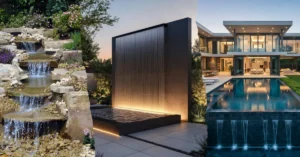
Read More: 10 Modern Water Feature Ideas to Upgrade Your Space
Residential vs Large-Scale Pool Needs
Your pool’s size plays a huge role in system selection. Residential and large-scale pools have very different filtration demands. While home pools focus on ease and efficiency, large facilities require powerful systems designed for heavy use, strict hygiene standards, and continuous water circulation.
Residential vs Large-Scale Pool Filtration System Needs
| Feature / Requirement | Residential Pools | Large-Scale / Commercial Pools |
| Usage Frequency | Limited daily use by family members | Constant use by many swimmers |
| System Capacity | Moderate filtration capacity | High-capacity filtration required |
| Maintenance Needs | Simple and less frequent | Regular & professional maintenance |
| Durability Focus | Comfort and quiet operation | Heavy-duty, long-lasting performance |
| Compliance Standards | Basic safety requirements | Must meet strict health regulations |
Swimming Pool Filtration System Price in Pakistan
The pool filtration system price in Pakistan varies depending on the size of your pool and the type of system you choose. A small residential swimming pool requires a moderate-capacity setup, while a larger facility may need a more advanced and high-capacity solution. Several factors influence the total cost of a swimming pool filtration system, including:
- Pool size and water volume
- Type of filter (sand, cartridge, or advanced media)
- Pump capacity and energy efficiency
- Installation requirements
- Equipment quality and durability
For homeowners looking for a swimming pool filtration system in Lahore, pricing can also depend on installation complexity and compatibility with existing equipment. Choosing a reliable and properly sized system may require a slightly higher initial investment, but it helps reduce maintenance costs and ensures long-term performance.
In commercial settings, a commercial swimming pool filtration system in Pakistan is designed for heavy usage and strict hygiene standards. These systems are built for durability and continuous operation, which naturally affects pricing.
Tip: Investing in the right filtration setup ensures clear water, lower maintenance expenses, and better overall efficiency for years to come.
Key Components: That Define Performance
The performance of any pool filtration system setup depends on how well its core components work together. Elements such as pumps, filters, and internal valves control water flow, pressure balance, and debris removal. When these parts are correctly sized and matched, the system operates smoothly, delivering consistent water clarity and reliable circulation.
A well-designed combination of quality components also reduces strain on equipment, lowers energy consumption, and extends overall system lifespan. Even small mismatches can affect efficiency, making proper selection and integration essential for long-term, trouble-free pool operation.
How to Choose the Best Pool Filtration System in Pakistan
Choosing the best swimming pool filtration system in Pakistan starts with understanding your pool’s size, usage level, and maintenance needs. A larger pool or one with frequent swimmers requires a higher-capacity swimming pool filtration system to maintain proper circulation and water clarity. Energy efficiency is also important, especially with rising electricity costs, as a well-sized system reduces power consumption while delivering consistent performance.
Budget should be considered carefully, but long-term reliability matters more than just the initial price. Investing in a properly matched pool filtration system in Lahore or anywhere in Pakistan helps prevent cloudy water, reduces repair costs, and ensures smooth operation for years. Selecting the right system ultimately protects your pool investment and keeps your water clean, safe, and enjoyable.
Understanding Equipment Compatibility
Equipment compatibility plays a vital role in achieving smooth and efficient pool operation. When pumps, filters, and fittings are properly matched, water flows evenly and performance remains consistent. Mismatched components can cause pressure issues and early wear. Working with Zellia Art Works, the largest pool equipment supplier in Lahore, ensures correctly paired equipment, expert guidance, and reliable solutions built for long-term performance.
What Impacts the Price of a Filtration Setup?
Many buyers ask about swimming pool filtration system price, and the answer depends on several factors:
- Pool size
- Usage frequency
- Filter type
- Pump strength
- Installation complexity
Investing in quality upfront often saves money over time. Higher-grade systems reduce repair costs, improve efficiency, and deliver more reliable performance, making them a smarter long-term investment rather than a short-term expense.
Conclusion: Invest in the Right Pool Filtration Setup
A well-designed pool filtration system is the foundation of clean, safe, and consistently clear water. From circulation and filtering to component compatibility and proper installation, every element plays a role in maintaining water quality and reducing long-term maintenance costs. Whether you are installing a residential setup or managing a commercial facility, choosing the right system ensures efficiency, durability, and reliable performance.
By understanding how different systems work, what affects pricing in Pakistan, and how to match equipment correctly, you can make a confident and practical decision. Investing in a properly sized and professionally installed filtration setup not only protects your pool but also saves time and money in the long run. With the right system in place, your pool remains clean, healthy, and ready to enjoy throughout the year.
Zellia Art Works: Pool Equipment Supplier offers expertly selected systems designed for both private and large-scale pools. We focus on quality, compatibility, and after-sales support makes system selection simpler and smarter.